Fraud is evolving – can you spot the signs?


From convincing fake websites and investment offers to AI-generated voices that sound like someone you trust, scams can be harder to spot.
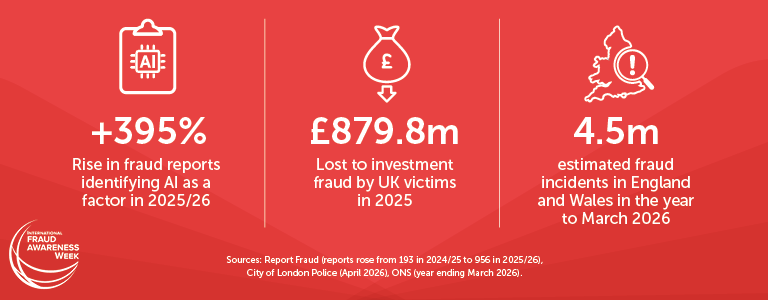
The Office for National Statistics estimates there were 4.5m incidents of fraud in England and Wales in the year ending March 20261, showing the scale of the problem remains substantial.
This Fraud Awareness Week, we're highlighting five scams to watch out for, the warning signs to look for and the steps you can take to protect your personal information and hard-earned savings.
5 scams to watch out for
1. Impersonation scams
Fraudsters often pose as someone you know or trust, such as your bank, the police, HMRC or a utility company. They might call, email or text you, claiming there's a problem with your account or that your money is at risk.
According to UK Finance, £576.4m was lost to authorised push payment (APP) fraud in 2025, up 19% on 20242. This is when someone is tricked into authorising a payment from their bank account to a fraudster.
Fraudsters aim to create panic and persuade you to act without thinking. You might be told to transfer your money to a so-called “safe account”, share security details or follow instructions to “protect your savings”.
Watch out for:
- Unexpected calls, texts or emails claiming there's a problem with your account.
- Requests to move money urgently to a “safe account”.
- Pressure to act immediately or keep the conversation secret.
- Requests for your password, PIN or one-time passcode.
How to stay safe:
- Never transfer money to a “safe account” (your bank will never ask you to do this).
- Never share your banking passwords, PINs or one-time passcode.
- End unexpected calls and contact the organisation directly using a trusted number from its official website or any correspondence.
2. AI and deepfake fraud
Artificial intelligence (AI) is giving fraudsters new ways to make scams appear genuine. They can create convincing messages, fake websites and even audio or video that mimics real people.
Report Fraud3 identified a 395% increase in reports identifying AI as a factor in 2025/26, while reported losses linked to AI-enabled crime rose from £1.2m in 2024/25 to £9.6m in 2025/2026.
Someone that sounds like a family member could call you asking for urgent financial help, or you could get a realistic-looking message from your bank or see a fake investment advert featuring a familiar face.
AI can also help criminals personalise scams using information they've found online or on social media.
Watch out for:
- Calls from someone claiming to be a relative in an emergency who urgently needs money.
- Video calls or voice messages that seem genuine but involve unusual requests.
- Polished emails, texts or social media adverts that encourage you to click a link or share sensitive information.
- Messages that create panic or pressure you into making a payment.
How to stay safe:
- Verify unexpected requests for money, even if the voice or video seems genuine.
- Contact the person using a number you already know.
- Consider setting up a family safe word to help verify genuine emergencies.
- Avoid clicking links in unexpected messages. Visit the organisation's official website directly instead.
- Limit the personal information you share publicly online.
- If something doesn't feel right, stop and check before acting.
Remember, a convincing voice, video or message isn't proof that someone is who they claim to be.
3. Online shopping and delivery scams
£118.1m was lost to purchase scams in 2025, according to UK Finance4. Fake shopping websites, social media adverts and fraudulent sellers can make it difficult to tell a genuine deal from a scam. Worryingly, figures from National Trading Standards (NTS) revealed that only 52% of online shoppers are confident they could spot a fake or misleading ad5.
Criminals may advertise popular products at tempting prices, take your payment and send nothing at all.
As the festive shopping season approaches, be particularly alert to delivery scams. Fraudsters may pose as well-known courier companies, claiming a parcel is waiting, a delivery has failed or a small redelivery or customs fee is due.
Their messages often contain links to fake websites designed to steal your personal information, payment details or online banking credentials
Watch out for:
- Prices that seem too good to be true.
- Sellers with few independent reviews or limited contact information.
- Requests to pay by bank transfer, particularly when buying from an unfamiliar seller.
- Unexpected delivery messages asking you to pay a fee or provide personal details.
- Unfamiliar sender addresses, suspicious links or messages that create urgency.
How to stay safe:
- Research unfamiliar retailers and sellers before buying.
- Use secure payment methods and any available buyer protection.
- Visit retailer and courier websites directly rather than clicking links in messages.
- Track parcels through official retailer or courier apps.
- Never enter your banking credentials through a link in an unexpected email or text.
4. Investment scams
Investment fraud can involve convincing websites, fake endorsements and professional-looking adverts promoting opportunities in cryptocurrency, property, bonds or trading platforms.
Fraudsters may promise unusually high or guaranteed returns, or exclusive access to an opportunity that won't be available for long. They might contact you unexpectedly by phone or social media or encourage you to invest through a website that looks legitimate.
These scams can result in significant financial losses, particularly when criminals persuade people to invest their savings. In fact, City of London Police reported that £879.8m was lost to investment fraud in 2025, an average of £2.4m lost every day or £1,675 per minute6.
Watch out for:
- Guaranteed returns or promises of unusually high profits.
- Unsolicited investment offers.
- Pressure to invest quickly before an opportunity disappears.
- Firms or websites that are difficult to verify independently.
How to stay safe:
- Check the Financial Conduct Authority (FCA) Register and Warning List to help establish whether a firm is authorised and whether there are warnings about it.
- Research the firm independently, including its website and contact details. Don't rely on links or information supplied by the person promoting the investment.
- Consider seeking independent financial advice before investing.
- Be cautious of unexpected offers, even if they appear to come from a familiar company or public figure.
Remember, professional-looking websites and convincing testimonials don't guarantee that an investment is genuine.
5. Identity fraud
Identity fraud accounted for 59% of all fraud-risk cases recorded on the National Fraud Database in the first half of 20267.
It happens when criminals obtain your personal information and use it without your permission. They could use it to apply for credit, open bank accounts, make purchases or attempt to access your existing financial accounts.
Information can be gathered through phishing emails, fake websites, data breaches, discarded documents or details shared publicly online.
Watch out for:
- Unexpected messages asking you to confirm personal or financial information.
- Threats that your account will be suspended unless you act immediately.
- Unfamiliar credit applications or notifications about accounts you haven't opened.
- Unusual activity on your bank statements or financial accounts.
How to stay safe:
- Use strong, unique passwords for your online accounts and enable multi-factor authentication wherever possible.
- Never share passwords, PINs or security codes.
- Keep your devices and software up to date.
- Shred documents containing personal information before disposing of them.
- Check your bank statements regularly and review your credit report for unfamiliar activity.
- Think carefully about what you share on social media.
If you think your personal information has been compromised, contact your bank promptly, change affected passwords and report the incident to Report Fraud. You can also contact the credit reference agencies for guidance on protecting your credit file.
STOP. THINK. VERIFY.
Whatever form a scam takes, fraudsters often rely on the same tactics: building trust, creating urgency and persuading you to act before you have time to think.
Before sending money, clicking a link or sharing personal information, remember three simple steps.
STOP – Pause before responding to an unexpected request.
THINK – Does it make sense? Is it unusual, urgent or asking you to do something you wouldn't normally do?
VERIFY – Check with the person or organisation using contact details you've sourced independently.
A few minutes spent checking could make all the difference.
What if you've been scammed?
If you've shared personal information, made a payment or think someone has accessed your account, don't delay. Acting quickly can help limit further losses.
Contact your bank immediately. Use a trusted telephone number, such as the one on your bank card or official website.
Stop communicating with the suspected fraudster. Don't send any more money or share further information.
Secure your accounts. Change any compromised passwords and contact the relevant providers if you think your accounts or devices have been accessed.
Report the fraud. Report the incident to Report Fraud and follow any advice from your bank or the relevant authorities.
Keep a record. Save messages, emails, payment details and other evidence that may help with an investigation.
If you've been targeted, don't feel embarrassed. Scams are designed to manipulate people, and anyone can be caught out. Reporting what happened can help you get support and may help prevent others from becoming victims.
How Charter Savings Bank can help
Protecting your savings is important to us. Here’s how we can help.
If someone claiming to represent us asks you to do any of these things, end the conversation and contact us using a trusted telephone number.
If you're concerned about your savings or think you've been targeted by a scam, call Charter Savings Bank on 0800 032 9999.
Useful contacts and advice
- Take Five – practical advice on spotting and avoiding scams, including a quiz to test your knowledge.
- Report Fraud – the UK's service for reporting fraud and cybercrime.
- Financial Conduct Authority – check firms and investment opportunitiIes, and find advice on avoiding investment scams.
- National Cyber Security Centre – advice on staying safe online.
- Age UK – information and advice on recognising and avoiding scams.
- MoneySavingExpert – 20 ways to stop scams.
For more advice and practical tips to help keep your savings secure, visit the Charter Savings Bank Fraud News Hub.
Stay alert. Stay informed. Stay protected.
Fraud
Popular posts like this
- Fraud is evolving – can you spot the signs?
- 3 scams you need to know
- Protecting yourself against winter scams, and what to do if you’re targeted
- The 5 biggest scams out there right now and how you can avoid them
- Helping you avoid scams?
- 5 ways to spot a scam website
- Scams | what to look out for
- Keeping your savings safe and secure
- Everything you need to know about Strong Customer Authentication (SCA)
- 7 Tips to stay safe on social media
Categories
More news
Financial Services Compensation Scheme
Your eligible deposits held by a UK establishment of Charter Savings Bank are protected up to a total of £120,000 by the Financial Services Compensation Scheme, the UK’s deposit protection scheme. Any deposits you hold above the limit are unlikely to be covered. Please click here for further information or visit www.fscs.org.uk.